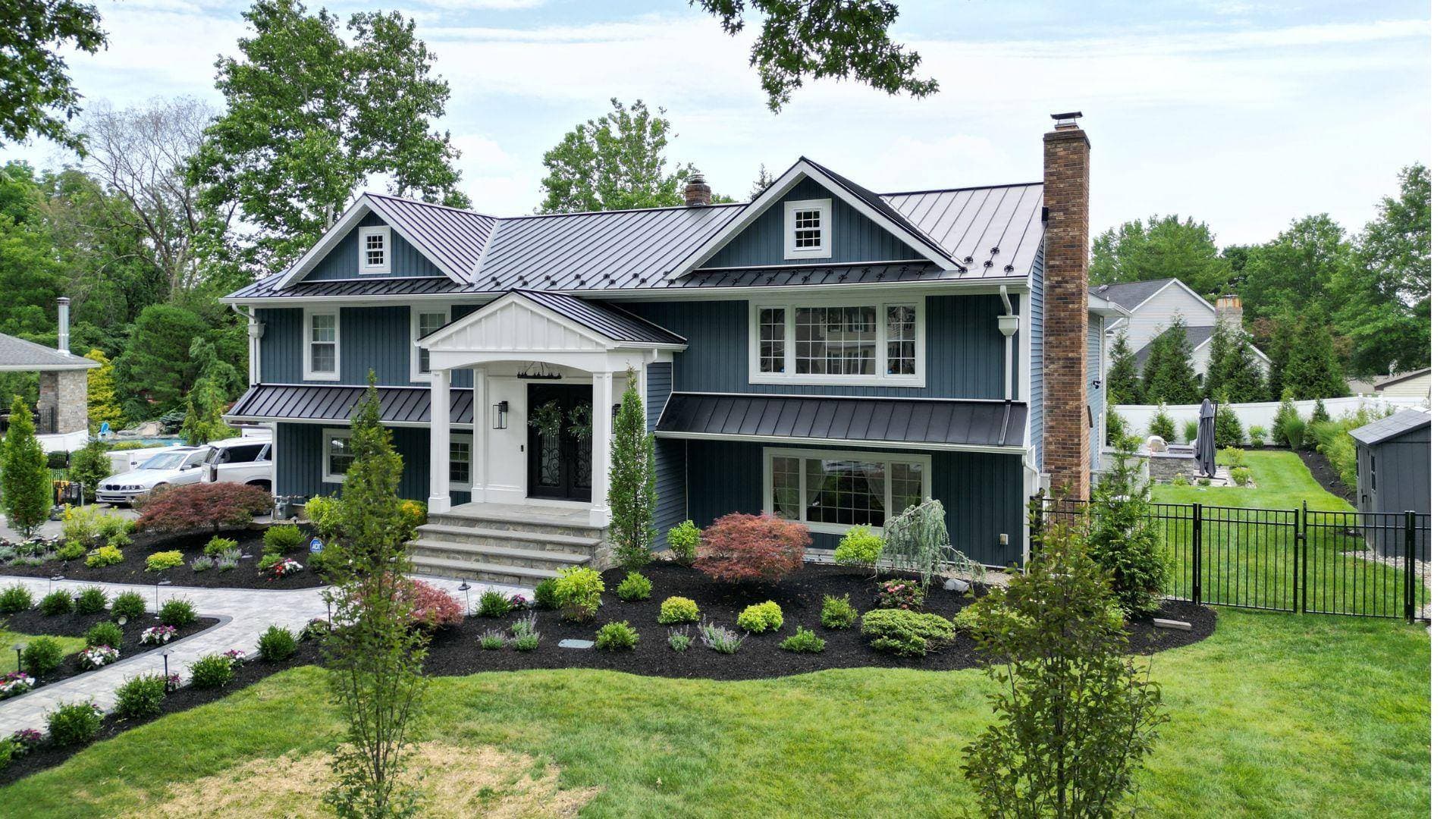
Roofing Contractor in Far Hills, NJ
Apex Roofing Solutions NJ provides expert residential roofing services for Far Hills homeowners. We specialize in evaluating roof transitions, performing targeted repairs, and executing complete roof replacements.
A Roof Is a Series of Connections
Roofing problems rarely start in the middle of a perfectly flat plane. Damage most often occurs at transitions—where planes meet, materials change, or structures penetrate the roof deck.
Map
We visually divide the roof to identify its unique transitions, slopes, and vulnerable junctions.
Connect
We track how a symptom in one area may be connected to a failure in another component.
Inspect
We physically evaluate the flashing, valleys, edges, and penetrations.
Prioritize
We help you determine whether the issue requires monitoring, scheduling, or immediate action.
Protect
We reinforce the connections to restore the integrity of the entire roofing system.
Where Roofs Change Direction
Areas where a roof changes direction, meets another structure, or contains an opening require careful attention because multiple components must interact perfectly to shed water.
Where two downward-sloping roof planes intersect. These areas manage the heaviest volume of water runoff and are highly susceptible to debris buildup.
Chimneys, plumbing vents, and skylights require specialized metal flashing or rubber boots to seal the gap between the deck and the protrusion.
Where a sloped roof meets a vertical exterior wall. This requires precise step flashing to direct water down the shingles rather than behind the siding.
Think of the Roof as a Map
A professional mentally divides the roof into structural zones. Identifying the location of a problem dictates how we trace the source.
- The Symptom: A ceiling stain in the living room.
- The Attic Pathway: Water tracking down a rafter above that ceiling.
- The Roof Plane: The specific slope above that rafter.
- The Transition: The nearby chimney flashing allowing the water to enter the plane.
The Visible Damage May Not Be the Whole Story
A visible defect must be evaluated in context. What you see is only the first piece of information.
What else should be evaluated: Are the surrounding shingles brittle? Has the underlying waterproof barrier been exposed to UV light?
The inspection determines if a simple tab replacement is sufficient or if the material has broadly failed.
What else should be evaluated: Has water bypassed the rubber boot and rotted the plywood decking beneath?
The inspection determines if the decking needs replacement alongside the new boot.
What else should be evaluated: Are the shingles losing their protective UV coating across the entire roof surface?
The inspection determines the remaining useful service life of the roofing system.
What Should an Inspection Connect?
A useful inspection doesn't just tell you that your roof is old. It should connect the dots between your symptoms, the location on the roof map, the failing component, the likely source, and the required scope of work.
A comprehensive evaluation should consider the condition of the roof covering (shingles), the integrity of the flashing at transitions, the water flow through the valleys, and the security of all penetrations.
Where accessible, it should also evaluate the underlayment, check the decking for rot, assess ventilation balance, and review the quality of previous repairs.
Roofing Connections Checklist
Homeowners can use this checklist when observing their property from safe, ground-level locations. Note any changes and provide this information when scheduling an inspection. Do not climb onto the roof yourself.
Roof Surface
- • Missing or displaced material
- • Curling or cracking edges
- • Visible dark patches (granule loss)
Transitions
- • Rusted or lifted flashing
- • Debris packed in valleys
- • Deteriorated rubber around pipes
Drainage
- • Disconnected downspouts
- • Gutters pulling away from fascia
- • Water overflowing during rain
Interior Signs
- • New ceiling stains
- • Damp insulation in the attic
- • Recurring water marks on walls
Not Every Roof Problem Has the Same Urgency
Monitor
Minor cosmetic observations (like algae streaks) or slight aging on a roof that remains watertight. Warrants routine professional evaluation over time.
Schedule
Visible material deterioration, recurring minor issues, or suspected flashing failure. Should prompt an inspection before structural damage occurs.
Address Promptly
Active water intrusion into living spaces, soft decking, or significant storm-displaced materials. Requires prompt professional intervention.
Determining the Scope
We evaluate localized versus widespread damage. If the damage is confined to a single transition on an otherwise healthy roof, repair is often sensible. If the materials are uniformly brittle, ventilation is failing, or the decking is compromised, full replacement is the permanent solution.
After a Storm, Check Connections
Following severe wind or hail, observe the roof from the ground. Look for changes around roof edges, visible flashing, and penetrations. Photograph visible damage and check interior ceilings for water. Do not climb the roof; arrange a professional inspection and keep your documentation.
Why Does Scope Matter?
Estimates vary because two roofs of the same square footage may have vastly different geometry. Complex transitions, multiple valleys, steep pitches, code requirements, and decking conditions dictate the labor and flashing required to build a secure system.
Try the Cost Calculator →Questions Worth Asking Before Work Begins
Roof Replacement
Comprehensive installation of modern residential roofing systems, ensuring all transitions, valleys, and ventilation components are built to perform.
Explore Roof Replacement →Roof Repair
Targeted interventions focusing on failing connections, compromised flashing, pipe boots, and isolated material damage to restore watertight integrity.
Explore Roof Repair →Roof Inspections
Systematic evaluations of your roof's planes, transitions, drainage, and underlying structure to provide factual data on its condition.
Explore Inspections →Storm Damage
Rapid evaluation of roof transitions and surfaces following severe weather events, accompanied by clear documentation of any sustained damage.
Explore Storm Services →Connect the Dots on Your Roof's Condition
Request a comprehensive inspection and receive transparent, factual diagnostics for your Far Hills property.
Tell us about your roof and receive a free replacement estimate from our roofing team.
Residential Roofing in Somerset County
Far Hills Roofing FAQs
Why are roof valleys and flashing so important?
Roofing problems frequently occur at transitions and connections—where the roof changes direction, meets a wall, or contains a penetration like a chimney. Flashing seals these vulnerable areas, and valleys manage heavy water runoff.
How can I tell if my roof needs repair or replacement?
The scope of work depends on whether damage is localized or widespread, the age and condition of the shingles, the integrity of the decking, and whether ventilation issues are compromising the system.
What should I do after a storm?
Check the connections. Observe from the ground for changes around roof edges, flashing, and gutters. Check accessible interior areas for new water intrusion, but never climb onto the roof yourself.
Are all roof leaks an emergency?
Not every issue has the same urgency. Active water intrusion into living spaces requires prompt attention, whereas minor cosmetic changes may just need to be monitored or scheduled for routine evaluation.
Why does the scope of work matter as much as roof size?
Estimates vary because complex roof geometry with multiple valleys, dormers, and required flashing transitions takes more time and material to install properly than a simple, flat-plane roof.