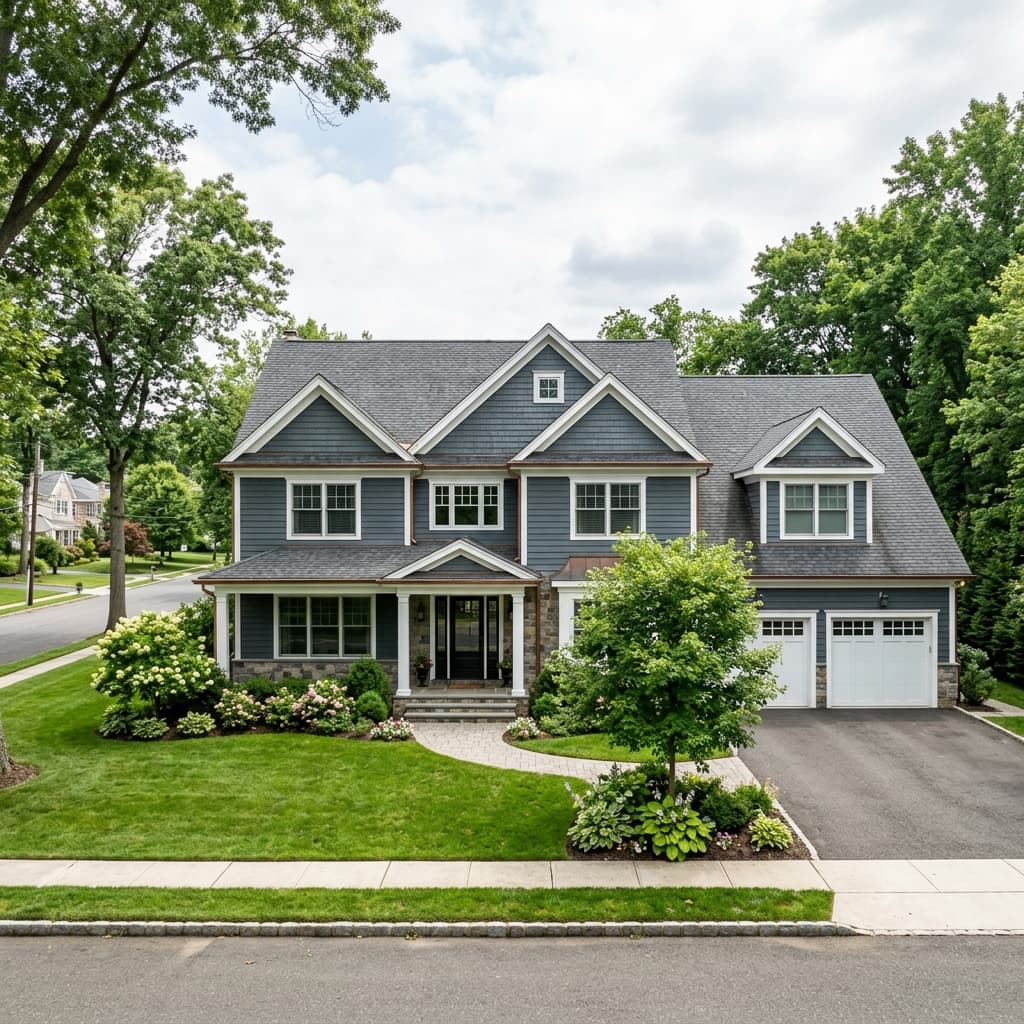
One of the most common questions homeowners ask is whether a sudden leak or visible damage means they need an entirely new roof. The short answer is: a roof does not automatically need replacement because of one leak. Localized damage can often be repaired effectively without replacing the entire system.
However, replacement becomes more appropriate when deterioration is widespread, leaks recur, the roof is near the end of its useful service life, or there is extensive structural damage. Furthermore, unpredictable New Jersey weather—from summer humidity to freezing winter ice—can significantly contribute to roof wear. Understanding the difference between isolated damage and a failing roofing system can save you time, money, and unnecessary stress.
Repair or Replacement? A Quick Guide
Deciding between roof repair services in New Jersey and a full replacement depends on the condition of your entire roofing system. Here is a quick comparison:
| Roof Condition | Repair May Be Appropriate | Replacement May Be Appropriate |
|---|---|---|
| Shingle Damage | One or a few damaged/missing shingles | Widespread cracking, curling, or missing shingles |
| Leaks | A small, isolated leak from a specific event | Repeated leaks across multiple areas |
| Age | A newer roof (under 10-15 years) | An aging roof near the end of its service life |
| Granule Loss | Minor, expected shedding from a new install | Heavy, persistent loss leaving asphalt exposed |
| Structural | Decking is intact and solid | Sagging, moisture issues, or compromised decking |
| Storm Impact | A fallen branch damaged a localized section | Extensive wind or hail damage affecting the entire surface |
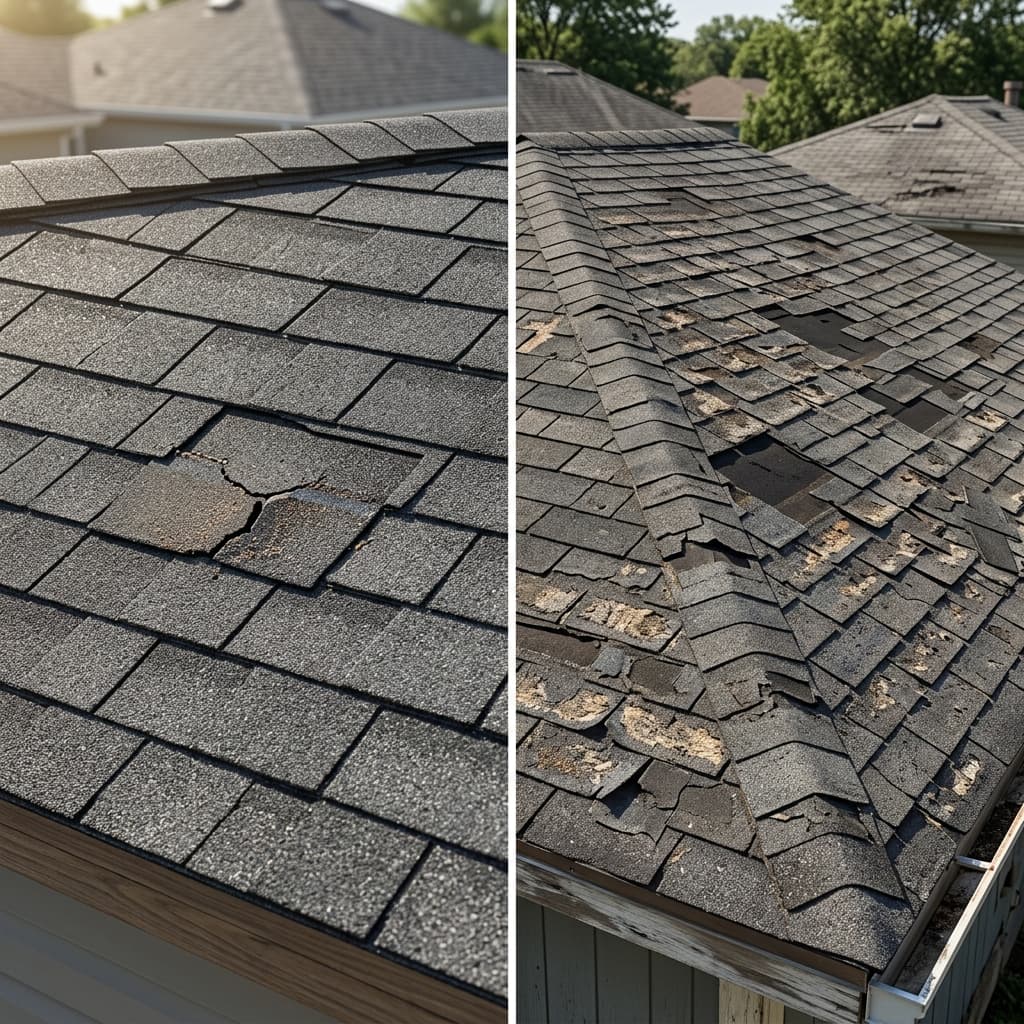
1. The Roof Is Near the End of Its Expected Service Life
Age alone does not automatically mean your roof needs replacement. The true lifespan of a roof depends heavily on the material, installation quality, weather exposure, maintenance history, and attic ventilation. While some materials can last decades, an aging roof experiencing multiple issues should be evaluated to see if its overall condition still warrants investing in repairs.
2. Shingles Are Cracking, Curling, Buckling, or Missing Across Multiple Areas
There is a significant difference between isolated damage and widespread deterioration. Watch for these visible warning signs across broad sections of your roof:
- Curling: Shingle edges turn upward or the middle bows outward.
- Cracking: Visible splits in the shingle surface.
- Buckling: Shingles appearing distorted or wavy.
- Missing shingles: Large patches of exposed underlayment.
3. You Are Finding Granules in the Gutters
Asphalt shingle granules protect the underlying material from UV rays and add fire resistance. Some granule loss can be normal, especially right after installation or after a heavy storm. However, substantial and persistent granule loss—often visible as a thick layer in your gutters—should be evaluated in context. It does not automatically mean replacement, but if the black asphalt layer is heavily exposed, the shingles are losing their protective capabilities.
4. Leaks Keep Coming Back After Repairs
An isolated leak usually points to a specific failure point, like a damaged pipe boot. But recurring leaks can indicate a broader roofing-system problem. If you are experiencing repeated water intrusion across multiple leak locations, the system as a whole may be compromised, making ongoing spot repairs a poor investment.
5. The Roof Is Sagging
A sagging roof is not simply a shingle-repair situation. Sagging can indicate underlying decking deterioration, structural weaknesses, or long-term moisture issues. Do not attempt DIY roof inspections if your roof appears to be sagging; this is a safety hazard that requires immediate professional evaluation.
6. There Is Widespread Storm or Wind Damage
New Jersey experiences diverse and severe weather, including high winds, heavy rain, snow, ice, and fallen branches. While a single displaced shingle from a thunderstorm might be a quick fix, widespread wind damage or severe ice impact across the entire roof surface may lead to a replacement recommendation. The FEMA provides extensive resources on how severe weather events can impact residential structures.
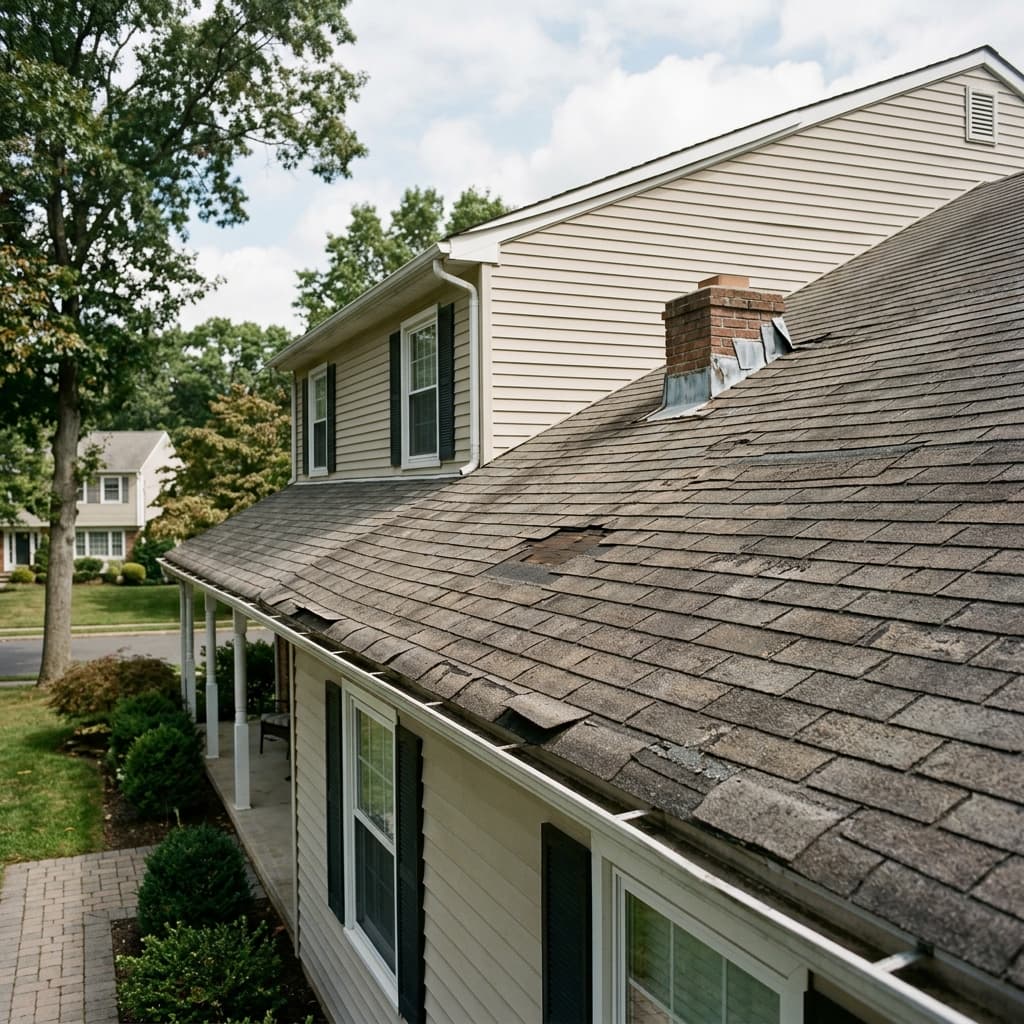
7. Flashing and Roof Penetrations Are Deteriorating
Flashing protects highly vulnerable areas such as chimneys, skylights, vents, and roof-to-wall intersections. One damaged flashing component can often be repaired. However, if there is widespread deterioration of flashing across multiple penetrations, it deserves a full assessment alongside the rest of the roof.
8. There Are Signs of Moisture or Water Damage Beneath the Roofing System
Water damage is not always visible from the outside. Signs of moisture beneath the roofing system can include deteriorated roof decking, compromised underlayment, poor attic insulation performance, or interior water stains. Evaluating the entire attic space is crucial for understanding the health of the roof above.
9. Previous Repairs Are Becoming More Frequent
Repair frequency matters. One isolated repair is potentially reasonable. But if you find yourself paying for multiple unrelated repairs over a short period, it is time to evaluate the overall roof condition. Recurring leaks combined with widespread deterioration and advanced age usually mean replacement may be more appropriate. However, this is not an automatic rule.
10. The Roof Has Multiple Problems at the Same Time
Replacement decisions should consider the entire roofing system rather than a single symptom. A roof experiencing granule loss, curled shingles, and failing flashing simultaneously is a stronger candidate for replacement than a roof dealing with just one of those issues.
When Is a Roof Repair Usually Enough?
Repair may make sense when damage is:
- Localized to a specific, small area.
- Easily identifiable (e.g., a single cracked vent boot).
- Limited in scope and severity.
- Not accompanied by widespread deterioration across the roof.
- Not part of a pattern of recurring failures.
When Does Roof Replacement Become More Likely?
These are indicators for professional evaluation, not automatic replacement rules:
- The roof is at the end of its expected service life with multiple signs of wear.
- Shingles are widely cracking, buckling, or curling.
- Large sections of shingles are missing.
- Granule loss is substantial, exposing the asphalt layer across broad areas.
- Leaks are recurring and appearing in multiple locations.
- The roof decking is visibly sagging.
- Severe storm damage has affected the majority of the roof's surface.
- Flashing is failing uniformly across multiple penetrations.
- Moisture damage has compromised the decking or attic insulation.
- Repairs have become frequent and costly.
Why New Jersey Weather Matters for Your Roof
New Jersey weather creates a demanding environment for roofing systems. Winter brings heavy snow and ice, leading to potential freeze-thaw conditions that expand existing cracks. Spring rainfall tests drainage and flashing integrity, while summer heat and thunderstorms bring UV degradation and high winds. Falling branches from mature trees are also a common cause of localized damage. The ENERGY STAR program highlights how weather-appropriate roofing materials can withstand regional climates while improving home efficiency.
What Should You Do If You Are Unsure Whether to Repair or Replace?
- Look for visible warning signs from the ground—do not climb onto a damaged roof.
- Review the roof's age and past repair history.
- Do not walk on a damaged roof yourself; it is highly unsafe.
- Have significant or recurring problems professionally inspected by a qualified contractor.
- Ask the inspector whether the problem is localized or widespread.
- Ask what specific evidence supports a repair versus a full replacement.
- Request a detailed written estimate if a full replacement is recommended.
Additionally, organizations like the National Roofing Contractors Association provide resources to help homeowners understand proper installation standards and what to expect from a professional evaluation.
Frequently Asked Questions
How do I know if my New Jersey roof needs to be replaced instead of repaired?
If damage is isolated to a few shingles, a repair is often sufficient. If you have widespread deterioration, recurring leaks, severe storm damage, or your roof is nearing the end of its useful life, replacement is likely the better long-term choice.
Does one roof leak mean I need a new roof?
No. A single, isolated roof leak on an otherwise healthy roof can typically be professionally repaired without requiring a full roof replacement.
How often should a New Jersey roof be inspected?
A professional roof inspection is recommended at least once a year, and especially after severe New Jersey storms that bring high winds, hail, or heavy snow.
Is granule loss a sign that a roof needs replacement?
Some granule loss is normal as a roof ages. However, substantial and persistent granule loss that leaves the asphalt layer exposed indicates the shingles are failing and replacement should be evaluated.
What is the most serious sign of roof damage?
A sagging roof deck is generally the most serious sign of damage, as it indicates underlying structural or moisture issues that require immediate professional attention.
Should I repair an old roof or replace it?
If a roof is near the end of its expected service life and experiencing problems, replacement is often more cost-effective than investing in frequent, repeated repairs.
The Bottom Line
A localized issue on an otherwise healthy roof can often be repaired. However, a roof with widespread deterioration, recurring leaks, extensive storm damage, structural concerns, or multiple failing components may require replacement. The decision should always be based on the condition of the entire roofing system. The U.S. Department of Energy provides further guidance on residential energy efficiency and roof-related considerations.
If you are uncertain about the condition of your roof, Apex Roofing Solutions NJ can inspect your home and help determine whether roof replacement services in New Jersey are truly necessary or if a targeted repair will suffice. Contact us today for a professional evaluation.