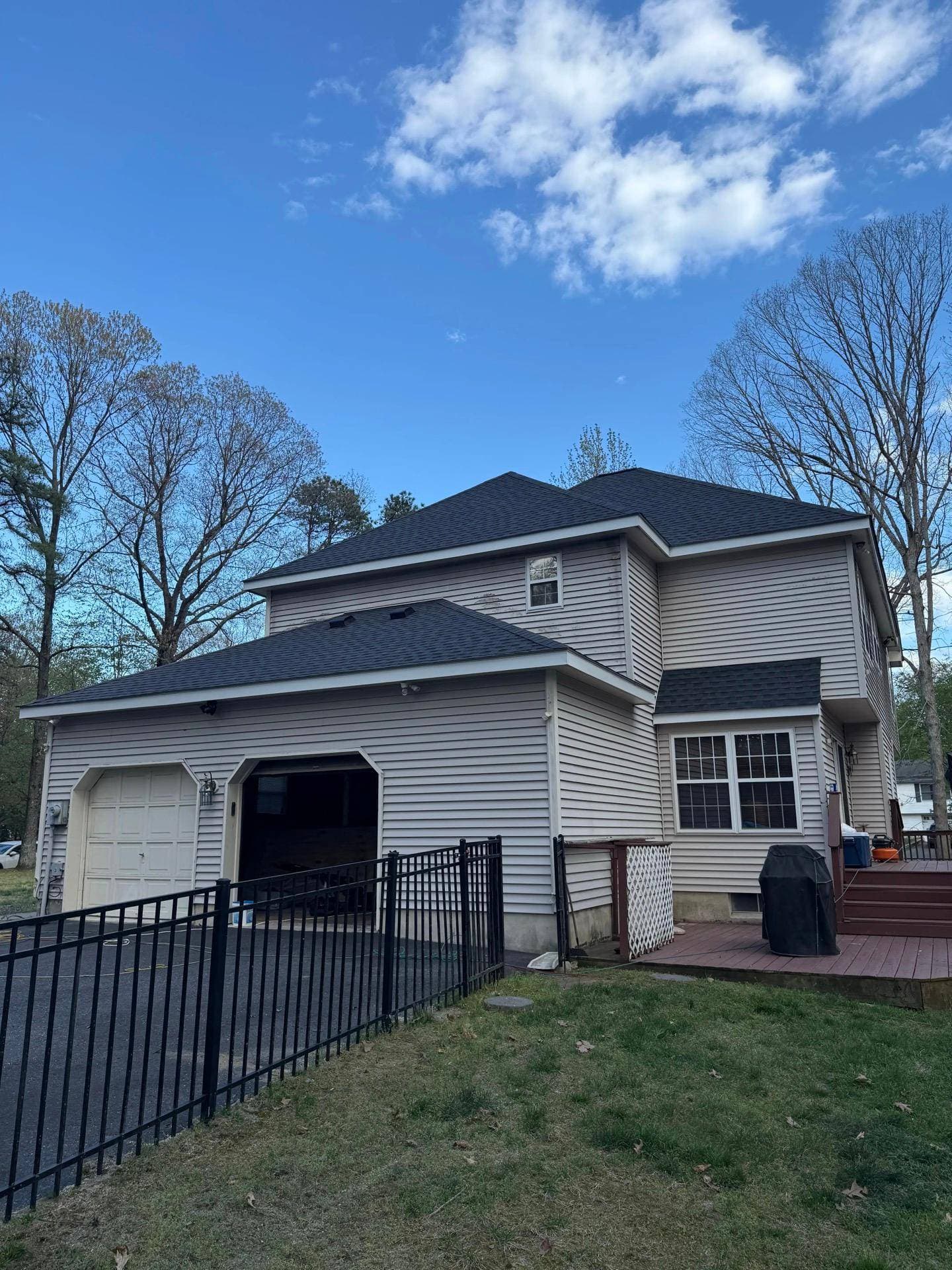
What Can Your Roof Tell You From the Ground?
You don't need a ladder to be a responsible homeowner. By knowing what to look for—and what to document safely from ground level—you can catch clues early before deciding to call a professional for a true inspection.
Tell us about your roof and receive a free replacement estimate from our roofing team.
Can you inspect your roof from the ground?
The Randolph Roof Observation Guide
Observe, don't climb. Here is how you can safely gather information about your roofing system from different vantage points around your property.
From the Driveway
- • Look at the overall roofline for straightness.
- • Check for obvious missing shingles.
- • Note any visible sagging sections.
- • Look for unusual debris accumulation.
From the Yard
- • Observe gutters and downspout connections.
- • Check visible flashing around edges.
- • Look for fallen roofing material on the lawn.
- • Check roof edges for deterioration.
From Windows
- • Look at lower roof sections visible from upstairs.
- • Observe skylight frames.
- • Check chimney areas for visible wear.
- • Spot unusual staining or material changes.
Inside the Home
- • Watch for new ceiling stains.
- • Check attic moisture indicators (where safely accessible).
- • Note wall staining near rooflines.
After Weather
The most powerful observation you can make is comparing what the roof looks like before and after significant weather events. Safe documentation of these changes provides excellent context for a roofing professional.
A Clue Is Not a Diagnosis
Observing a visible issue from the ground is helpful, but it's crucial to remember that looking is not diagnosing.
- • Missing shingles may have multiple causes beyond simple wind.
- • An interior ceiling stain may originate from a location far from where it drips.
- • Flashing can appear intact from 20 feet away while still actively leaking.
- • Visible wear does not automatically mean an immediate full replacement is necessary.
Responsible roofing guidance starts with recognizing when an observation requires professional investigation.
| What You Can See | What It May Mean | What to Do |
|---|---|---|
| Missing/displaced shingles | Weather or physical damage | Photograph safely, arrange evaluation |
| Sagging roofline | Possible structural/moisture concern | Seek professional evaluation |
| Damaged flashing | Possible water-entry concern | Have the area inspected |
| Heavy granules in gutters | Possible accelerated shingle wear | Evaluate overall roof condition |
| New interior stain | Possible water intrusion | Investigate the source promptly |
| Repeated visible repairs | Recurring roofing concern | Consider a broader inspection |
Compare, Don't Guess
The point of ground-level observation is to document change, not to guess the diagnosis. You learn the most by comparing states over time.
Before vs After
What changed following severe weather or high winds?
This Year vs Last Year
Does the roof look materially different than it did last spring?
Section vs Section
Is visible wear isolated to one side of the house, or is it widespread?
Inside vs Outside
Does an interior symptom (like a stain) correspond with an exterior visual change above it?
The Roof Observation Log
Keeping notes over time makes conversations with a roofer much more effective.
Start With the Roofline
Observe the ridge and edges. A straight roofline is normal. Visible sagging, irregular lines, or poor gutter alignment can be clues, but they are not structural diagnoses. If something looks structurally unusual, it warrants professional evaluation.
What Are the Shingles Telling You?
Missing shingles, curling edges, cracking, or excessive granule loss are common visual signals. Roof age and material type matter heavily here. These clues suggest wear but do not automatically dictate that a full replacement is required.
Your Gutters Are Part of the Conversation
Overflowing gutters, detached sections, or pooling water near the foundation are safe to observe. Gutters handle roof runoff, so their performance provides clues about drainage, but they don't establish a definitive roofing diagnosis.
Sometimes the First Clue Is Inside
Ceiling stains, wall moisture near the roofline, or damp attic insulation are serious signals. Remember that the visible interior location rarely perfectly matches the exterior roof-entry point. Professional leak investigation is typically required.
Randolph Year-in-Review Roof Check
Connect each season to what you can safely observe from the ground.
When Observation Should Become Investigation
Monitor
Nothing obviously changed, but continue normal periodic observation.
Document
Something looks subtly different (like normal aging). Photograph it for your baseline.
Schedule
A recurring issue, missing materials, or clear deterioration deserves professional evaluation soon.
Address Promptly
Active water intrusion or significant visible damage from a storm requires immediate attention.
Urgency depends on actual circumstances, not just categories.
What a Professional Inspection Adds
Why can't you just inspect it yourself? Because roof access can be dangerous, and a professional evaluation assesses areas you cannot reliably evaluate from the driveway.
- • Close-up material condition
- • Flashing and seal integrity
- • Valley and penetration health
- • Hidden signs of water intrusion
- • Ventilation effectiveness
- • True repairability vs replacement needs
A Visible Problem Does Not Automatically Mean a New Roof
Decisions depend on the extent of damage, location, material age, and underlying conditions. Potential paths include:
- 1. Repair: Fixing an isolated issue like a damaged flashing seal.
- 2. Maintenance: Monitoring and minor preventative work.
- 3. Investigation: Deeper assessment of a complex leak.
- 4. Replacement Planning: Preparing for a full system upgrade when serviceability is gone.
What Should You Understand Before Approving Work?
A professional roofing estimate should clearly outline the exact scope of work, including materials, removal, underlayment, flashing details, cleanup, and warranties. Estimates differ between homes based on these variables.
After a Storm, Document First
- 1 Stay off the roof.
- 2 Observe safely from the ground.
- 3 Photograph visible damage.
- 4 Record the date and time noticed.
- 5 Check inside for new water intrusion.
- 6 Protect interior areas if safe.
- 7 Keep documentation.
- 8 Contact a qualified roofing professional.
Ready to Investigate the Clues?
Apex Roofing Solutions NJ provides expert residential roofing inspections, repairs, and replacements in Randolph Township. If your ground-level observations suggest an issue, contact us for a professional evaluation.
Tell us about your roof and receive a free replacement estimate from our roofing team.
Randolph Roofing FAQs
Can you inspect your roof from the ground?
Homeowners can safely observe certain visible conditions from the ground, such as missing shingles, sagging rooflines, or overflowing gutters, but a ground-level check cannot replace a professional roofing inspection. A roofer must evaluate flashing, underlayment, and specific material wear up close.
What are common signs of roof damage?
Common visible signs of roof damage include displaced or missing shingles, heavy granule loss in gutters, visible deterioration around flashing or penetrations, and interior signs like ceiling stains or wall moisture.
Can a ceiling stain show where a roof is leaking?
A ceiling stain shows where water is pooling inside, but it rarely shows exactly where the roof is leaking. Water often travels along decking and rafters before dropping down, meaning the exterior breach could be far away from the interior stain.
What should I do after a storm damages my roof?
After a storm, prioritize safety. Stay off the roof, observe the damage from the ground, photograph what you can see, note the date and time, check inside for water intrusion, and then contact a qualified roofing professional for a thorough assessment.
When should a homeowner call a roofer?
A homeowner should call a roofer when they observe a recurring or noticeable issue, such as a new interior leak, missing shingles, damaged flashing, or an unusual change in the roof's appearance following a weather event.
Does roof age automatically mean replacement?
No, roof age alone does not automatically dictate replacement. While older roofs are more susceptible to failure, a decision should be based on the actual condition of the materials, the extent of any damage, and a professional evaluation of the system's remaining serviceability.