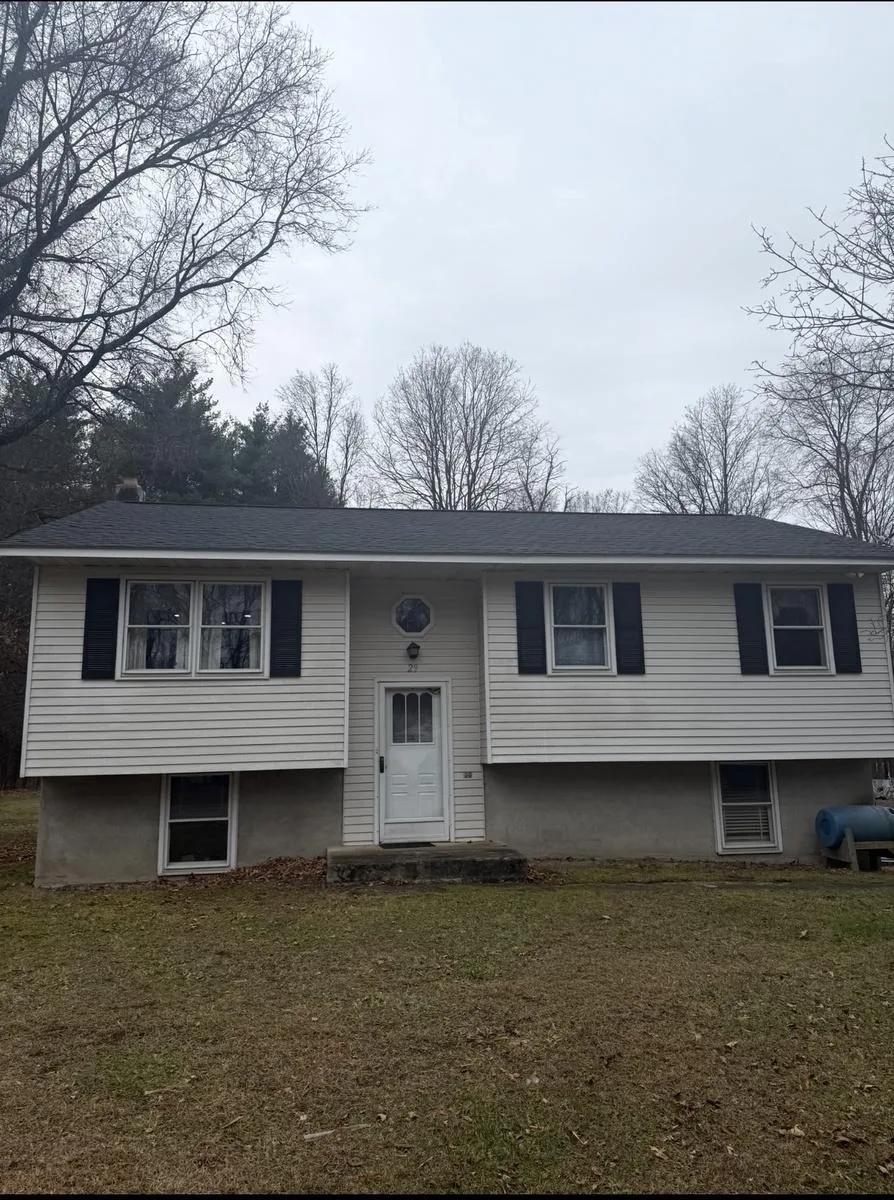
Roofing Built for Montague's Open Landscapes & Changing Seasons
Positioned at the northwestern edge of Sussex County between the Delaware River corridor and the ridges near High Point, Montague Township spans open country parcels, wooded residential roads, and detached homes with varied roof layouts. Apex Roofing Solutions provides clear inspections, targeted repairs, and full residential roof replacements tailored to how your property actually sits on the land.
Quick Quote
Why Montague Roofs Face Different Demands from Lot to Lot
Montague is not a uniform subdivision. A home set across open farmland along County Route 650 experiences different wind and sun exposure than a residence shaded by hardwoods near River Road or tucked along a wooded side lane. Effective roofing starts with assessing the property in front of us rather than applying a one-size-fits-all checklist.
Wind-Driven Weather Across Cleared Parcels
Properties set back on open acreage along Route 206 or elevated stretches near the Kittatinny ridge often catch sustained crosswinds without neighboring structures to break the gusts. Proper starter-course adhesion, nail placement, and secured ridge caps are essential to prevent shingle lift.
Tree Debris, Shade & Valley Accumulation
Not every Montague property sits in an open clearing. Homes tucked into wooded corridors near the Delaware River valley or High Point border collect pine needles, twigs, and autumn leaves in valleys and behind chimneys—holding moisture against shingles if left unaddressed.
Roof Drainage on Varied Rural Designs
From single-story ranches and split-levels to multi-gable homes with attached porches and detached garages, long roof planes move significant rainwater and snowmelt. Metal drip edges, open valley channels, and properly pitched gutters keep runoff away from fascia and foundations.
Detached Structures & Secondary Roofs
Rural Montague parcels frequently include detached garages, workshops, or home additions with lower-slope tie-ins. Evaluating every roof plane on the property ensures secondary structures do not become overlooked sources of leaks or rot.
Keeping Runoff Moving Off Broad Rural Rooflines
On detached rural homes with wide gable runs, intersecting valleys, or porch tie-ins, water management is just as important as the shingles themselves. When pine needles, leaves, or windblown debris collect in valleys or clog downspouts, meltwater and heavy rain back up along the eaves—quietly soaking fascia boards and roof decking.
- Cleanly formed roof valleys with self-adhering underlayment to handle concentrated runoff.
- Non-corrosive metal drip edge along eaves and rakes to guide water cleanly into gutters instead of behind wood trim.
- Properly sized and pitched seamless gutters and downspouts that carry water away from rural foundations and walkways.
- Practical guidance on clearing tree debris around wooded lots to prevent trapped moisture along shaded slopes.
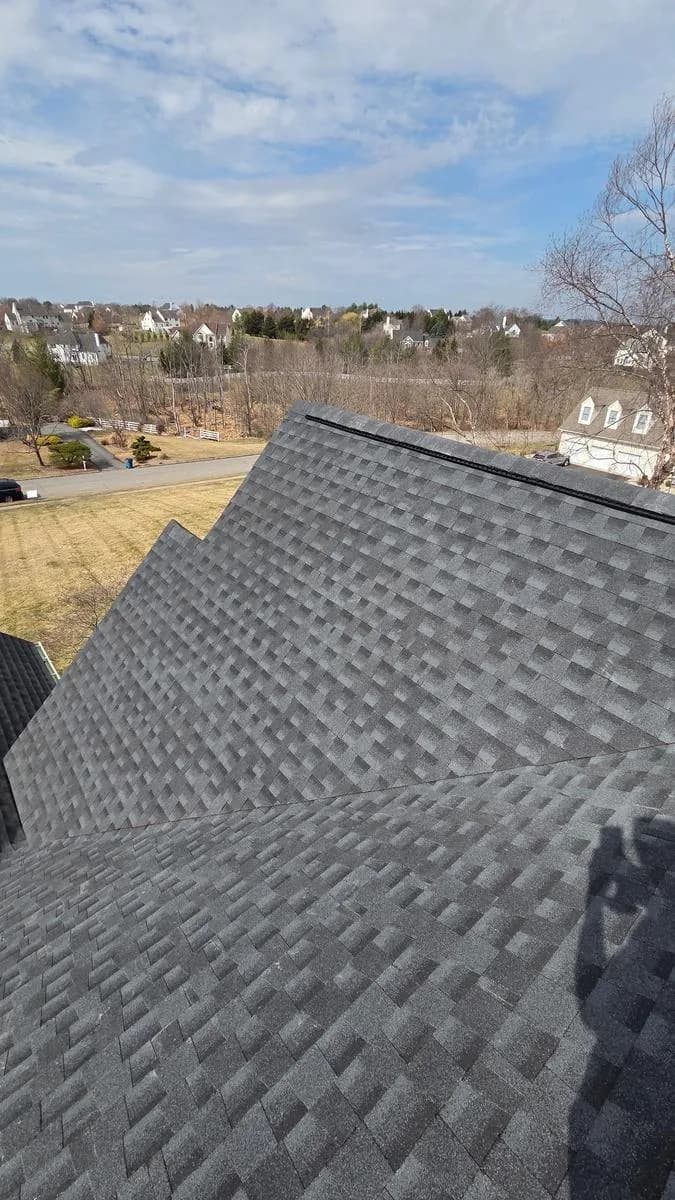
Apex Workmanship Example • Raritan Township, NJ
Clean hip-and-valley framing and crisp perimeter drip edge built to move seasonal runoff smoothly off multi-plane roofs.
Shingles, Flashing & Roof Penetrations Working Together
Most residential roof leaks do not begin in the middle of an open shingle field. They start where the roof meets something else—a chimney, a vent pipe, a dormer wall, or a valley edge. Inspecting these transitions thoroughly prevents recurring interior water stains.
Schedule a Montague Roof InspectionChimney Step & Counter-Flashing
Masonry chimneys expand and contract through seasonal temperature swings. Layered metal step flashing paired with counter-flashing set into mortar joints prevents water from slipping behind surface sealants.
Plumbing Vent Boots & Exhaust Caps
Sun exposure and winter cold gradually dry out rubber pipe collars around plumbing stacks. Replacing cracked boots during routine maintenance or a full replacement stops one of the most common attic leak sources.
Skylight Curbs & Dormer Sidewalls
Where vertical walls or skylight frames interrupt a sloped roof, water concentrates along the edges. Dedicated flashing kits and kick-out diverters guide runoff safely into the gutter line rather than behind siding.
Eaves, Rakes & Valley Transitions
Wind-driven rain and winter meltwater hit roof perimeters and valleys hardest. Self-adhering membrane underlayment in these zones provides a watertight secondary barrier beneath the finished shingles.
Roof Repair vs. Full Roof Replacement in Montague
We inspect your roof deck, shingles, and flashing with photo documentation so you can see whether a focused repair makes sense or if replacement is the smarter long-term choice.
When a Targeted Repair Makes Sense
- Localized wind-blown or creased shingles confined to one exposed slope or ridge section.
- Deteriorated rubber pipe boots, loose vent hoods, or isolated chimney flashing gaps.
- Surrounding shingles remain pliable with intact granules and solid wood decking underneath.
When Full Replacement Is the Better Investment
- Widespread granule loss, brittle or curling tabs, or cracked shingles across multiple slopes.
- Recurring leaks, soft or delaminated roof decking, or inadequate attic ventilation causing deck moisture.
- An aging roof nearing the end of its service life where repeated patchwork costs begin to add up.
Four-Season Roof Inspection Priorities in Montague
Post-Winter Deck & Shingle Check
Look for wind-lifted tabs, shifted flashing, granule accumulation in downspouts, and any attic moisture staining left behind by winter freeze-thaw cycles.
Attic Heat & Ventilation Balance
Confirm soffit intake vents are unobstructed and ridge or roof exhaust vents allow trapped summer heat to escape without baking shingles from underneath.
Debris Clearing & Gutter Flow
Clear leaves and pine needles from roof valleys, chimney saddles, and gutters so late-autumn rain drains freely before freezing temperatures arrive.
Eave Drainage & Meltwater Watch
Monitor eaves for uneven snow melt or icicle buildup, which can signal heat loss into the attic or blocked drainage along the lower roofline.
Examples of Our Residential Roofing Work Across the Region
The photos below showcase completed Apex Roofing Solutions installations across New Jersey and neighboring Orange County, NY—demonstrating the same ridge alignment, valley detailing, and outbuilding workmanship we bring to Montague homeowners.
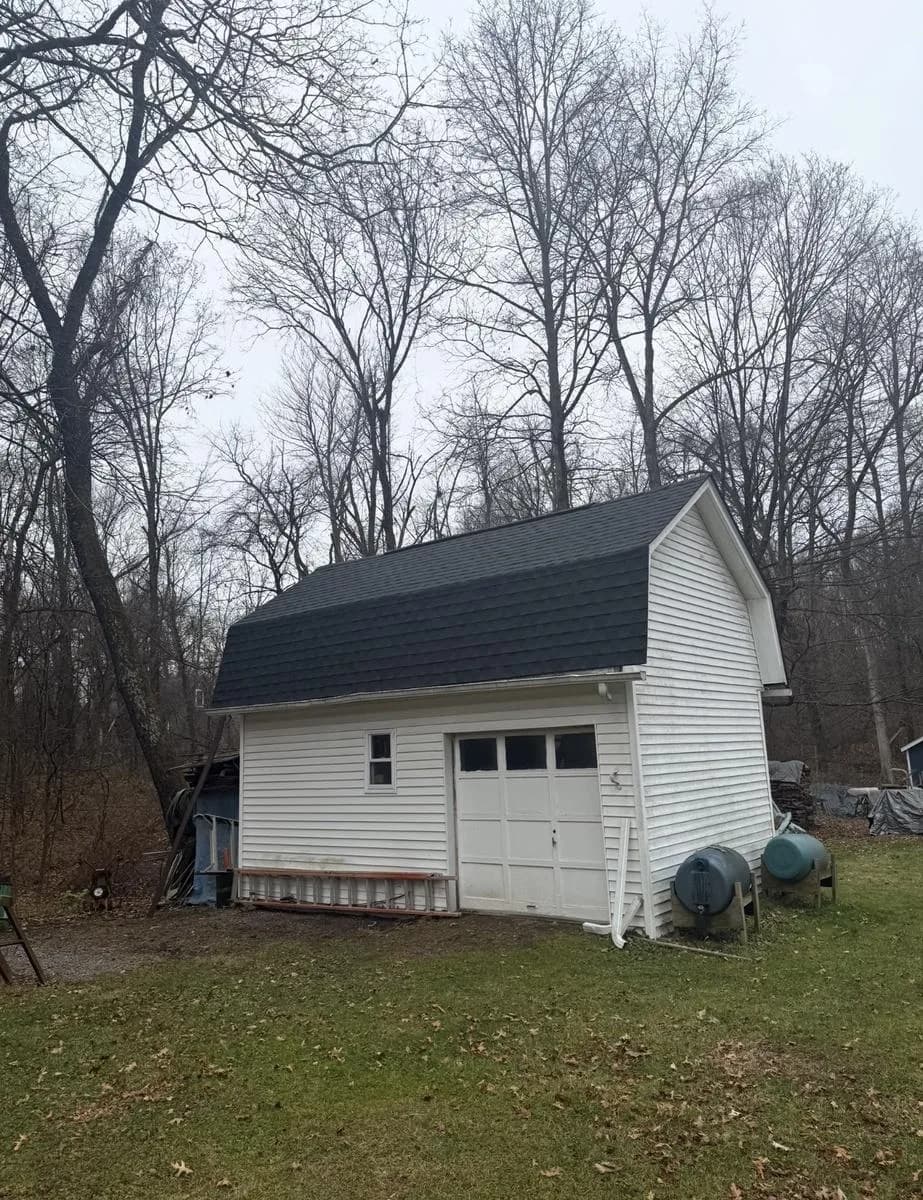
Detached Outbuilding & Steep-Profile Detailing
Coordinated architectural shingle installation and crisp trim detailing on a detached residential structure.
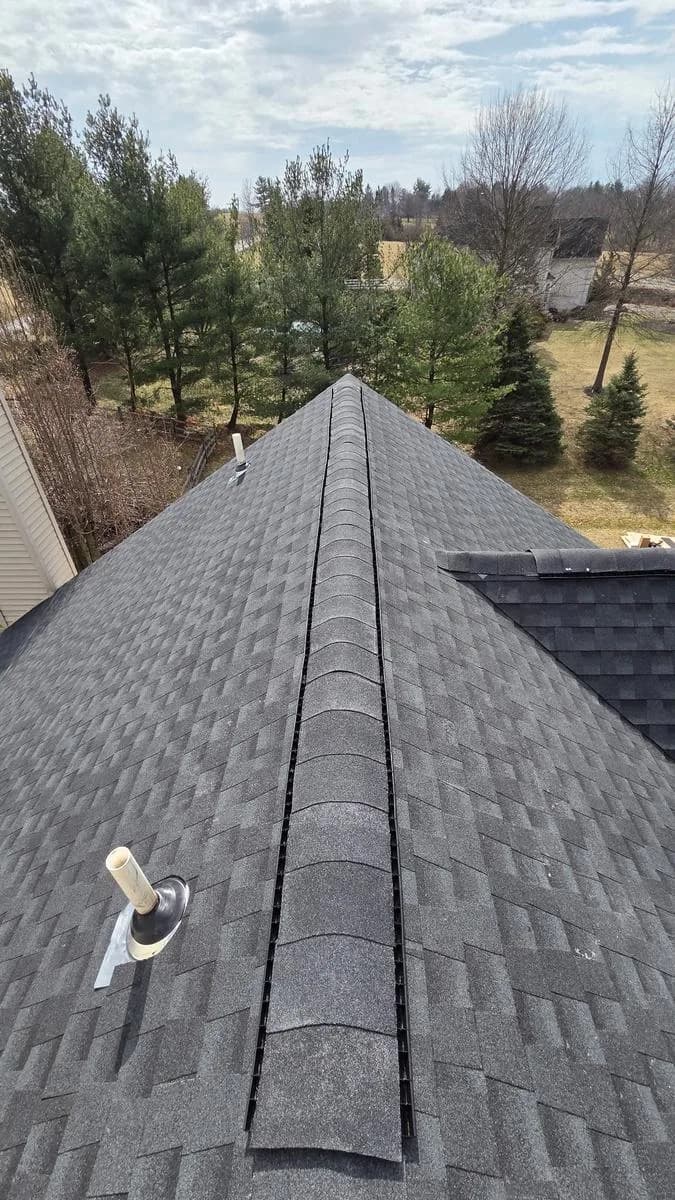
Long Ridge Alignment & Perimeter Fastening
Straight shingle courses, clean ridge cap alignment, and weather-tight perimeter finishing across broad roof planes.
Intersecting Hip & Valley Runoff Geometry
Precision valley transitions engineered to direct heavy seasonal rainfall cleanly into the gutter system.
Part of Our Full Sussex County Roofing Coverage
From our Woodland Park headquarters, our crews serve Montague Township alongside neighboring Sandyston, Wantage, Branchville, and communities throughout Sussex County, NJ.
Montague, NJ Roofing FAQs
What areas of Montague Township, NJ do you serve?
We serve residential properties across Montague Township (07827) in northwestern Sussex County, including homes along U.S. Route 206, County Route 521 (River Road), County Route 650 (Deckertown Turnpike), Clove Road, and neighborhoods near the Delaware River corridor and High Point area.
Why do roofs on open rural lots in Montague wear differently than sheltered wooded lots?
Property conditions across Montague vary significantly. Homes sitting on open acreage or elevated ridges tend to experience stronger, unobstructed wind gusts that test shingle sealing strips, rake edges, and ridge caps. Homes surrounded by mature trees face heavier seasonal leaf and needle accumulation in valleys and gutters. An on-site inspection helps match materials and maintenance to your specific lot.
Can you inspect or replace roofs on detached garages, barns, or outbuildings along with my house?
Yes. Many Montague properties include detached garages, workshops, or secondary residential structures in addition to the main home. We can evaluate and service both primary homes and detached structures during the same project so drainage, flashing, and roof materials stay consistent across the property.
How do I know whether my Montague roof needs a targeted repair or a full replacement?
A localized issue—such as wind-lifted tabs on one slope, a cracked plumbing vent boot, or worn chimney flashing—on a roof with otherwise healthy shingles and decking can often be resolved with a targeted repair. Widespread granule loss, curling or brittle shingles across multiple planes, recurring leaks, or softened wood sheathing generally point toward a full replacement.
How often should a rural home in Montague have its roof inspected?
Scheduling a visual roof and attic check once a year—typically in spring after winter freeze-thaw cycles or in autumn after heavy leaf drop—helps catch loose flashing, clogged valleys, and early shingle wear before water reaches the interior. An additional check is worthwhile after high-wind events.
What roof drainage details matter most for larger country rooflines?
Long gable spans and intersecting valleys channel large volumes of rain and snowmelt toward the eaves. Clean valley channels, properly installed metal drip edge, clear gutters pitched toward downspouts, and extensions that carry water away from the foundation all work together to protect fascia boards and siding.
Need a Clear Assessment for Your Montague Roof?
Whether you are noticing wind-lifted shingles, planning ahead for an aging roof, or checking a detached garage alongside your home, call our team or request a written estimate.