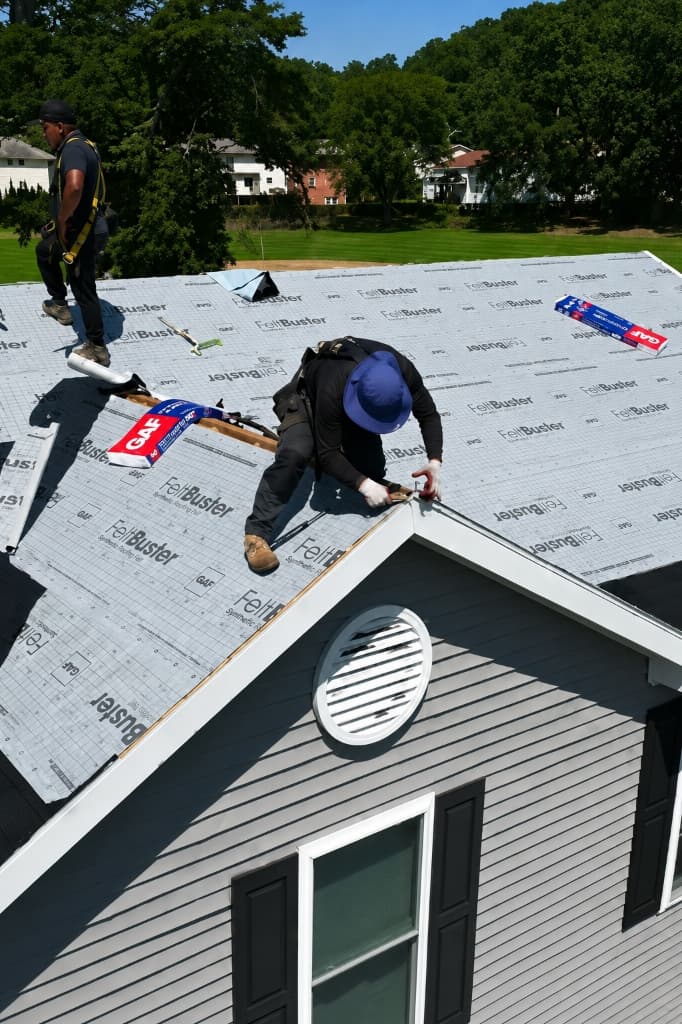
True residential roofing defense in Monmouth County requires more than new shingles. It demands a fully integrated system—from underlayment to ventilation—working together to protect your home from coastal moisture and severe weather.
The Roofing System Map
When you search for "roofing companies near me," you are often looking for someone to replace the surface. However, a lasting installation requires optimizing every structural layer below.
1. Surface Layer
The exterior shield. High-quality architectural asphalt shingles or metal panels that deflect direct sun, wind, and impact.
2. Water Shedding
The secondary defense. Specialized underlayment and ice-and-water barriers installed directly over the wooden decking.
3. Transitions
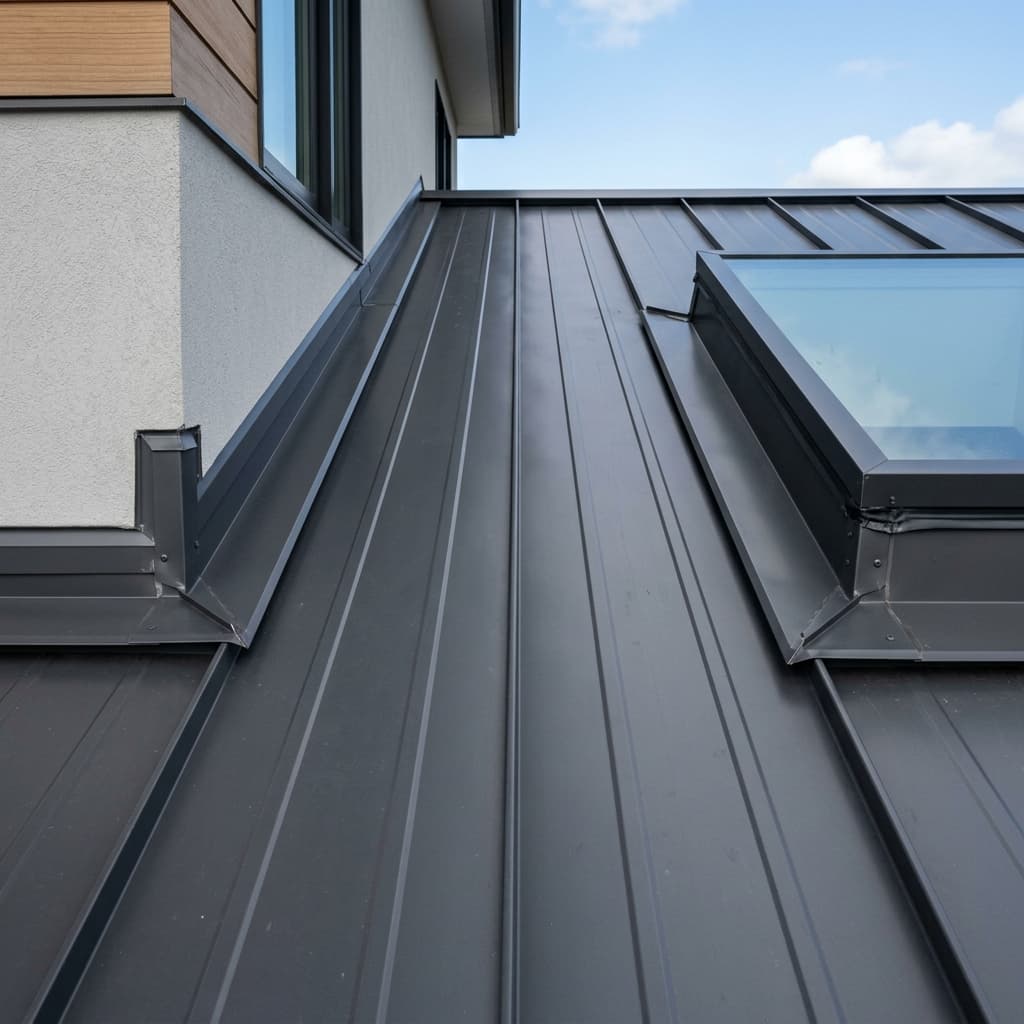
The vulnerable joints. Metal flashing carefully shaped around chimneys, skylights, and valleys where different roof planes intersect.
4. Edges & Gutters
The perimeter control. Drip edges and properly pitched gutters that capture runoff and direct it safely away from the foundation.
5. Ventilation
The breathing mechanism. Balanced intake and exhaust vents that prevent superheated attics and winter condensation.
6. The Home Interior
The ultimate protected space. When all five previous steps work in harmony, the interior envelope remains completely dry.
The Shingle Is Only One Piece
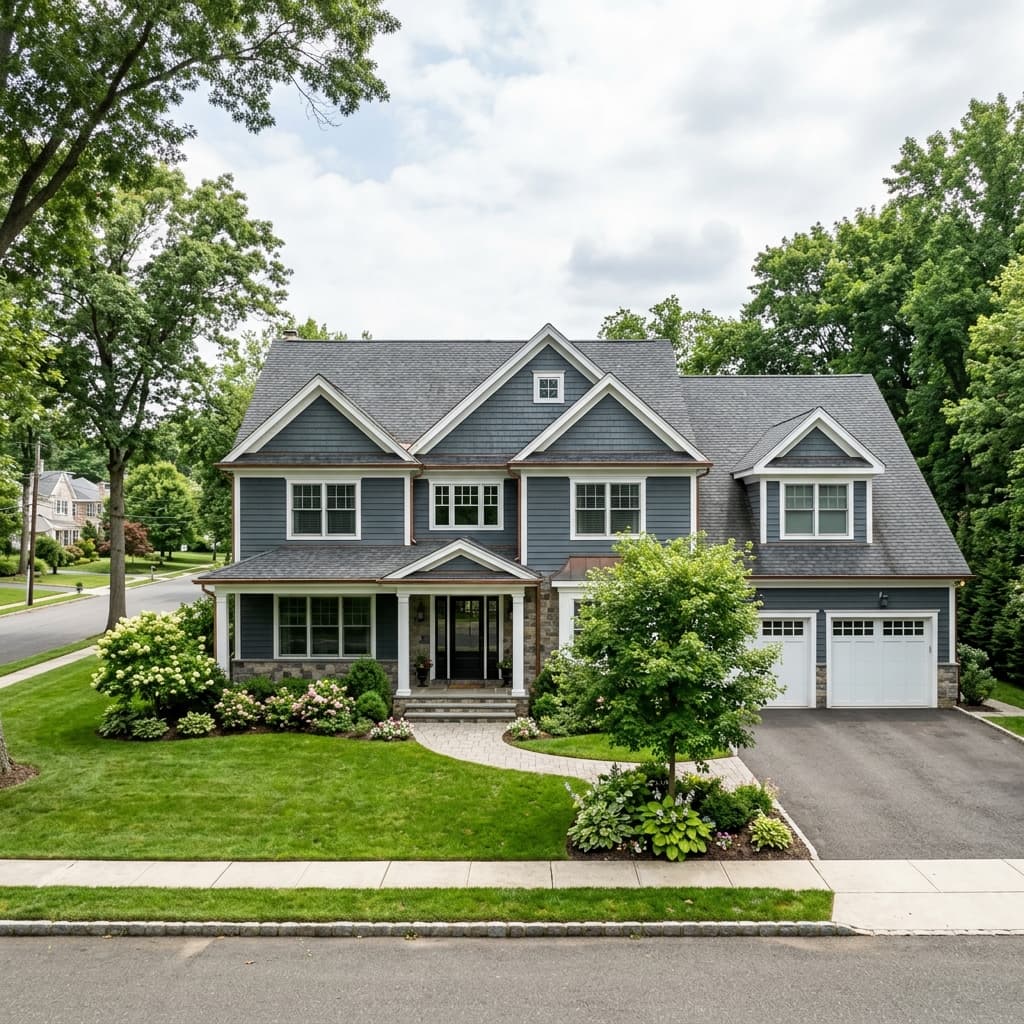
It is very common for homeowners to evaluate their roof by simply looking at the asphalt shingles. If they don't see missing pieces, they assume the roof is fine.
However, the shingle is just the visible surface. A roof can look perfectly intact from the street while failing silently at the flashing seams, rotting the plywood decking underneath due to poor ventilation, or allowing water to pool in an improperly flashed valley. We look beyond the surface.
Where Roof Problems Actually Start
Water Accumulation
Areas where water slows down, such as low-slope sections or behind chimneys.
Vulnerable Transitions
The valleys where roof planes meet, often relying on metal flashing for protection.
Roof Penetrations
Pipes, vents, and skylights require precise sealing that often degrades before the shingles do.
Attic Conditions
Poor airflow trapping heat, baking the shingles from below and accelerating aging.
5 Things an Allenhurst Homeowner Can Check From the Ground
As a homeowner in Monmouth County, you are the first line of defense.
Missing Materials
Look for bare spots, missing shingles, or torn tabs visible from the yard.
Roofline Changes
Observe the ridge and flat planes for unusual sagging or bowing.
Displaced Flashing
Check around the chimney or vents for lifted or bent metal strips.
Gutter Overflow
Watch during heavy rain to see if water cascades over the gutter edges.
Interior Stains
Check upper-floor ceilings for yellow or brown water rings after rain.
After Heavy Weather: Look for Changes, Not Just Leaks
Allenhurst Boro experiences the full force of Monmouth County coastal weather, from summer thunderstorms to winter Nor'easters. A severe weather event can damage a roof system without immediately causing a visible drip in your living room.
The Post-Storm Process
- 1. OBSERVEWalk the perimeter of your property safely. Look for debris, missing materials, or exposed areas on the roof deck.
- 2. DOCUMENTTake photos of any yard debris (like shingle pieces) and document the date and time of any new interior stains.
- 3. INSPECTCall a professional roofing contractor near me for a thorough evaluation of the system's integrity.
- 4. DECIDEReview the inspection findings to determine if targeted repairs or a larger insurance claim process is warranted.
Repair, Restore, or Replace?
Not every roof leak requires a total replacement. We help homeowners make data-driven decisions based on the actual condition of the system.
When to Repair: The damage is localized (e.g., a fallen branch), the flashing around a specific penetration has failed, or the overall age and condition of the surrounding materials still offer years of viable service life.
When to Replace: The material has reached the end of its lifespan, granules are heavily depleted, the plywood decking is showing widespread rot, or you are experiencing recurring leaks that indicate fundamental system failure.
What Actually Changes the Cost of Roofing?
Actual project pricing depends on your property, not generic averages. Here are the variables that dictate a roofing installation estimate:
- Total Square Footage
- Roof Pitch (Steepness)
- Complexity (Valleys, Dormers)
- Material Selection
- Tear-off & Disposal
- Decking Replacements
- Ventilation Upgrades
- Flashing Requirements
Evaluate Your Roofing System
The best roofing companies near me will provide a transparent, written assessment of your property without high-pressure sales tactics. We prioritize education, showing you exactly what is happening on your roof and providing clear residential roofing services to address it.
Roofing Financing for Homeowners Planning a Larger Project
If your inspection reveals that a full roof replacement is necessary, financing can help spread the cost of this critical home improvement.
*Available for qualified homeowners. Talk to our team for details.
Our Verified Services in Monmouth County
Request an Inspection
Get a comprehensive assessment of your entire roofing system.
Allenhurst Boro Roofing FAQs
Information for making informed local decisions.